High intake of processed food and table salt raises sodium intake
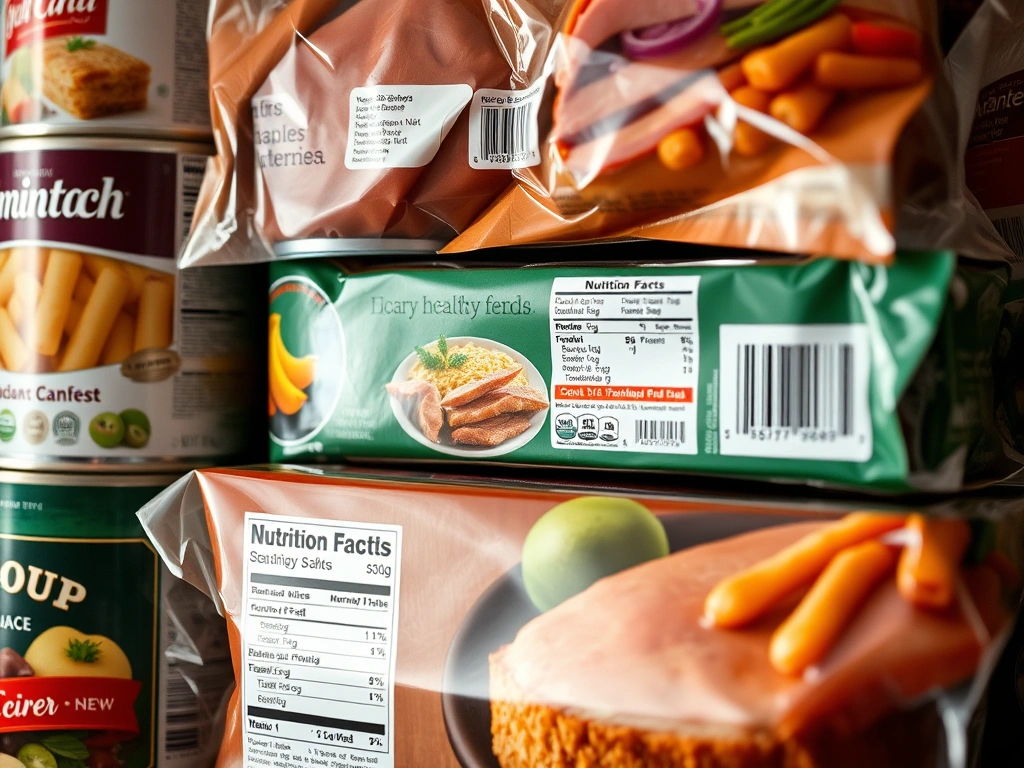
Most of the sodium in a typical diet doesn't come from the shaker on the table — it comes from packaged, canned, and restaurant food eaten throughout the week. Bread, canned soup, deli meat, and frozen entrées can each carry several hundred milligrams of sodium per serving before anyone adds a pinch at the stove, and eating a pattern built around these foods pushes daily sodium well past the level associated with lower cardiovascular risk.
The general target cited by heart-health nutrition guidance is to keep sodium under roughly 2,300 mg a day, with further benefit for people with high blood pressure at lower intakes still, according to the USDA's Eye on Nutrition heart-healthy diet guidance. That number matters because sodium's effect on the heart runs through a specific, measurable pathway: excess sodium causes the body to retain fluid, which raises blood volume and, with it, blood pressure. Sustained high blood pressure is one of the strongest modifiable drivers of heart attack, stroke, and heart failure, a relationship laid out in the review of heart-healthy diets for cardiovascular disease prevention.
The dietary pattern with the clearest trial evidence for reversing this chain is the DASH eating plan — Dietary Approaches to Stop Hypertension — which emphasizes vegetables, fruit, low-fat dairy, and whole grains while capping sodium, and which the Memorial Sloan Kettering cardiac diet guide describes as the template most often used for cardiac nutrition counseling. Someone eating this way in practice replaces canned and cured foods with fresh or no-salt-added versions, cooks more meals at home, and treats the salt shaker as a small part of a much bigger sodium budget rather than the whole of it.
Diet built on refined grains, red or processed meat and added-sugar foods

A pattern heavy in white bread, processed and red meat, and sugar-sweetened foods and drinks raises cardiovascular risk not just by what it adds, but by what it displaces. Every meal built around a burger, fries, and a soda is a meal without the vegetables, whole grains, and fish that guidance consistently recommends in their place, per the Mayo Clinic's eight steps to a heart-healthy diet.
The fix is a direct substitution, not a subtraction:
- Swap white bread, white rice, and refined pasta for whole-wheat bread, brown rice, oats, and other whole grains.
- Swap red and processed meat (bacon, sausage, deli slices) for fish, skinless poultry, beans, or lentils several times a week.
- Swap sugar-sweetened drinks and desserts for water, unsweetened beverages, and fruit.
- Swap regular dairy and fried sides for low-fat dairy and vegetables prepared without heavy butter or cream sauces.
Guidance from the UCSF Center for Prevention of Heart and Vascular Disease and the Harvard Health heart-healthy foods overview both frame these swaps in terms of daily and weekly targets rather than single meals: several servings of vegetables and fruit spread across the day, whole grains at most meals, and fish in place of red meat two or more times a week. Meeting those counts consistently, rather than perfectly at any one meal, is what shifts the overall pattern.
Added sugar and sodium are mostly hidden in packaged foods, not the salt shaker
Cutting back on the salt shaker or the sugar bowl barely moves the needle, because both nutrients are already built into packaged food before it reaches the table. A slice of bread, a jar of pasta sauce, or a flavored yogurt can each contribute meaningful sodium or added sugar without tasting noticeably salty or sweet, which is why label reading — not taste — is the reliable way to track intake.
The Nutrition Facts label separates "added sugars" from "total sugars," a distinction worth checking specifically because total sugars include the natural sugar in fruit or milk, which isn't the target of heart-healthy limits — only the added portion is. The USDA heart-healthy diet resource advises comparing the sodium and added sugar per serving across similar packaged products — two brands of canned beans or two loaves of bread can differ several-fold in sodium content for the same serving size. A practical label check takes three steps:
- Check the serving size first — the per-serving sodium and sugar figures only apply to that amount, and many packages contain more than one serving.
- Compare the % Daily Value for sodium between similar products and choose the lower one when the rest of the nutrition profile is similar.
- Look at grams of added sugars specifically, not just "sugars," and favor products where it's zero or minimal.
Cooking more meals at home from whole ingredients sidesteps most of this hidden sodium and sugar automatically, since the cook controls how much salt and sugar goes in rather than inheriting a manufacturer's formulation.
Heart-healthy diet
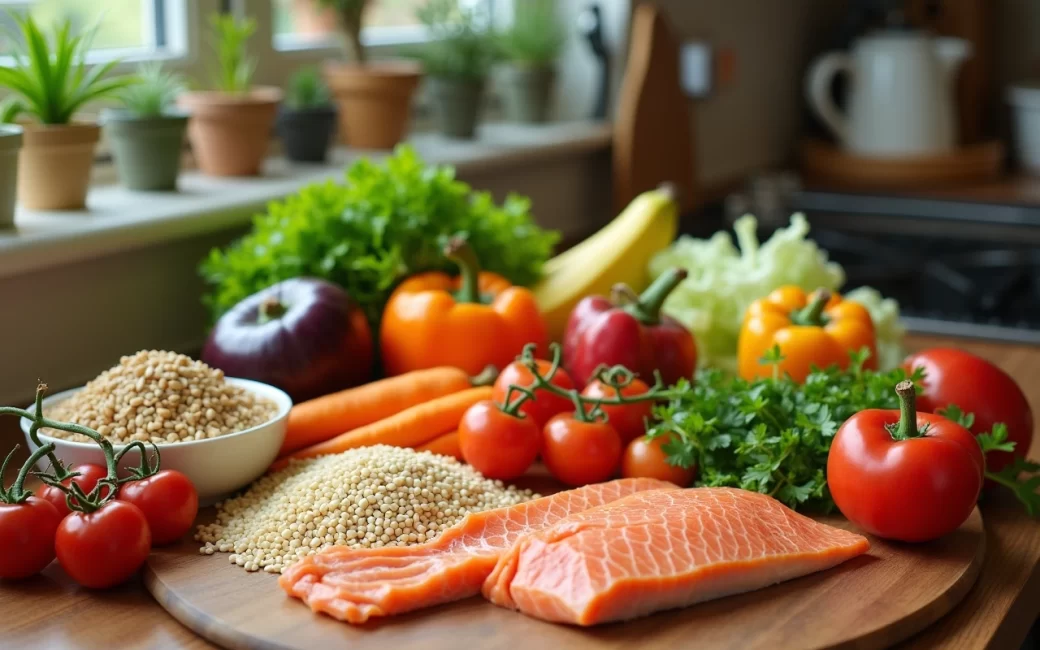
A heart-healthy diet is not one food but an overall pattern: plenty of vegetables and fruit, whole grains instead of refined ones, fish and other lean protein instead of red or processed meat, and limits on sodium and added sugar. This is the framing used consistently across major guidance, including the Mayo Clinic's eight-step outline.
What separates this pattern from a list of "good" and "bad" foods is that it's evaluated as a whole diet over weeks and months, not meal by meal. The review of cardiovascular prevention diets notes that patterns like DASH and the Mediterranean diet share this same core structure — vegetables, fruit, whole grains, fish, nuts, and legumes as the base, with red meat, refined grains, and added sugar minimized rather than eliminated. No single ingredient swap replicates that effect; it's the sustained combination that's been tied to lower cardiovascular risk in trial and cohort data.
Fruit
Fruit is one of the core food groups counted toward a heart-healthy pattern, typically in terms of daily servings alongside vegetables. General heart-health guidance points toward several servings of fruits and vegetables combined each day, with a serving usually equal to about a half-cup of chopped fruit, one small whole fruit, or a similar portion, as outlined in the USDA nutrition guidance.
It matters to separate fruit's natural sugar from added sugar when tracking intake. A piece of fruit contributes fiber, potassium, and vitamins alongside its natural sugar, which behaves differently in the body than sugar added to a soda or pastry — one reason fruit isn't restricted the way added-sugar foods are in heart-healthy eating guidance. Whole fruit is generally preferred over fruit juice, since juice concentrates sugar without the fiber that slows its absorption.
Fish
Fish is the protein source most consistently recommended as a stand-in for red and processed meat in heart-healthy eating patterns. Guidance from the Mayo Clinic and the Harvard Health overview both point to fatty fish — salmon, mackerel, sardines, trout — eaten roughly twice a week as a practical target, since these species carry more of the omega-3 fatty acids associated with cardiovascular benefit than leaner white fish.
A serving is generally about 3 to 4 ounces, or roughly the size of a deck of cards — a detail rarely spelled out even where "servings" are counted. Canned fish like sardines or salmon is a reasonable substitute for fresh when cost or availability is a barrier, though it's worth checking the label for added sodium, since canned fish packed in brine can carry a meaningful sodium load per serving.
DASH eating plan
The DASH eating plan — Dietary Approaches to Stop Hypertension — is a specific, tested dietary pattern rather than a general description of "eating healthy." It was developed and studied to lower blood pressure through diet alone, and it's the pattern most often used as the template for cardiac nutrition counseling, according to the Memorial Sloan Kettering cardiac diet guide.
| Feature | DASH pattern |
|---|---|
| Core foods | Vegetables, fruit, whole grains, low-fat dairy |
| Protein emphasis | Fish, poultry, beans, nuts over red meat |
| Sodium target | Reduced sodium, generally at or below the general heart-healthy ceiling |
| Fat | Limited saturated fat and added sugar |
| Evidence base | Clinical trials measuring blood pressure change |
DASH differs from a generic "eat more vegetables" recommendation in that it specifies proportions and sodium ceilings tested in trials, rather than leaving the amount to interpretation. For someone managing high blood pressure specifically, it's the pattern with the most direct trial support tying the diet itself — not just individual foods within it — to a measured drop in blood pressure.
What is the healthiest food for your heart?
There isn't a single food that outperforms all others — heart-healthy eating is a pattern, not a single ingredient, but fatty fish, vegetables, fruit, whole grains, nuts, and legumes are the foods that show up across every major guidance source as the base of that pattern. Fatty fish stands out specifically for its omega-3 content, which is why it's recommended roughly twice a week rather than left as an occasional option, per Harvard Health's heart-healthy foods guide.
Vegetables and fruit contribute fiber, potassium, and antioxidants with very little sodium or added sugar, while whole grains and legumes add fiber that's linked to lower cholesterol. No one of these foods works in isolation — the benefit comes from eating several of them regularly in place of processed food, red meat, and added sugar, which is the pattern the UCSF nutrition guidance describes as the practical goal rather than any single "best" food.
What are three foods cardiologists say not to eat?
Guidance doesn't name three forbidden foods outright — it names three categories to limit: processed and red meat, foods high in added sugar, and heavily processed packaged foods high in sodium. Within those categories, the items that come up most consistently in heart-healthy eating guidance are processed meat (bacon, sausage, deli meat), sugar-sweetened beverages, and canned or packaged foods high in sodium such as canned soup and frozen entrées, as described across the USDA and Mayo Clinic guidance.
The distinction that matters is frequency, not total avoidance. None of these foods needs to disappear entirely from a heart-healthy pattern — the guidance is to limit how often and how much of them appear relative to vegetables, fruit, whole grains, and fish, not to eliminate them on principle.
What are 10 ways to keep my heart-healthy?
The most consistent set of practical steps across major guidance comes down to a short list of habits, not a single rule. The Mayo Clinic's eight-step framework, together with the swaps described above, combines into a broader set of actions:
- Control portion sizes rather than eliminating entire food groups.
- Eat more vegetables and fruit — aim for several servings spread through the day.
- Choose whole grains over refined grains most of the time.
- Limit unhealthy fats, particularly saturated and trans fat, in favor of unsaturated fats like olive oil.
- Choose low-fat protein sources — fish, poultry, beans, and legumes — over red and processed meat.
- Reduce sodium by cooking at home and comparing labels rather than relying on the salt shaker alone.
- Limit added sugar in drinks, desserts, and packaged snacks.
- Plan meals ahead so the default choice is the heart-healthy one, not the convenient one.
- Read nutrition labels for sodium and added sugar per serving before buying packaged food.
- Build the pattern gradually and consistently rather than treating any single meal as decisive.
What is the best diet for people with heart failure?
For someone already diagnosed with heart failure, the general heart-healthy pattern still applies, but sodium and fluid limits typically become stricter and more closely monitored than they are for general prevention. Heart failure specifically impairs the body's ability to manage fluid balance, so excess sodium and fluid retention can worsen symptoms like swelling and shortness of breath more directly and more quickly than in someone without the diagnosis, a distinction the review of cardiovascular prevention diets notes separates management after diagnosis from general prevention advice.
In practice, this means sodium targets and sometimes daily fluid intake are set individually by a treating clinician or dietitian rather than following the general population ceiling, and label reading for sodium becomes more consequential than for someone managing risk before any diagnosis. The foundation — vegetables, fruit, whole grains, fish, and limited processed food — stays the same; what changes is how tightly the sodium and fluid numbers are tracked and who sets the specific target.
Start by checking the sodium and added sugar per serving on three packaged foods already in the kitchen, and see how they compare against the general heart-healthy targets described above — that single check does more to shift a week's eating pattern than any list of foods to avoid.