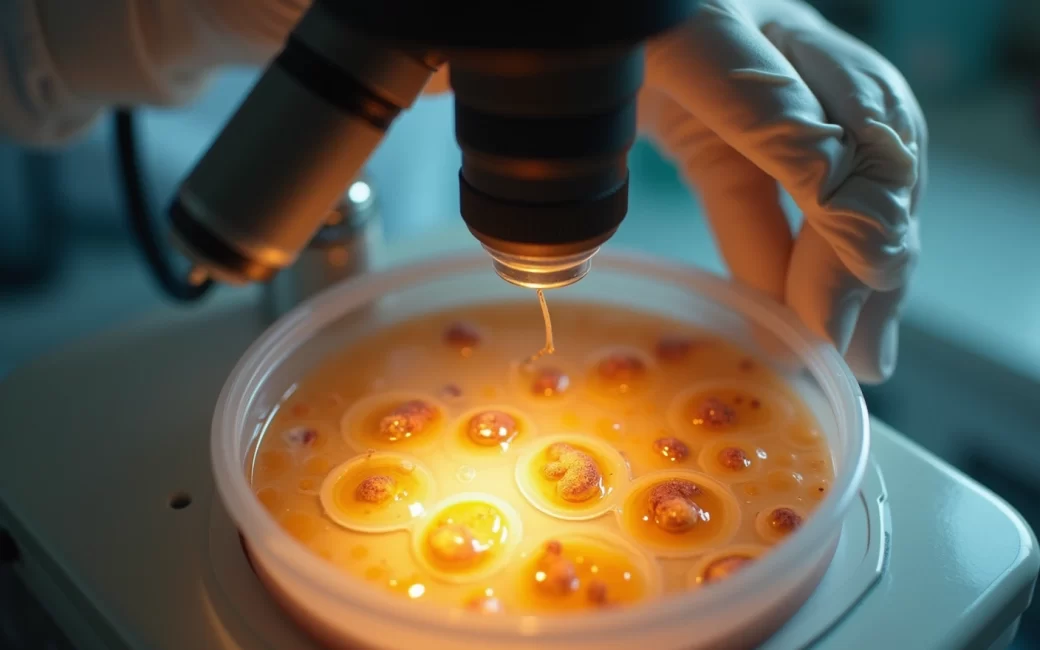
Is ART the same as IVF?

No. In vitro fertilization is the most common procedure that falls under assisted reproductive technology, but it is one member of a larger group. The CDC defines ART as any fertility treatment in which either eggs or embryos are handled outside the body, which rules out treatments like ovulation-inducing medication or intrauterine insemination — those help conception happen inside the body and are usually classed separately, even though people sometimes lump them in with "fertility treatment" generally. If a clinic mixes eggs and sperm in a lab dish, transfers an embryo, or freezes and later thaws one, that procedure counts as ART.
The five types of assisted reproductive technology
ART procedures are generally grouped by where fertilization happens and whether the embryo or gametes are transferred immediately or after freezing. The NICHD and Cleveland Clinic both describe these as variations on the same basic idea — retrieve eggs, combine them with sperm, and place the resulting embryo where it can implant — with each variant suited to a different cause of infertility.
| Type | What happens | Where fertilization occurs | Typically used for |
|---|---|---|---|
| IVF (in vitro fertilization) | Eggs and sperm combined in a lab dish; resulting embryo transferred to the uterus | Outside the body | Blocked or absent fallopian tubes, unexplained infertility, many other causes |
| ICSI (intracytoplasmic sperm injection) | A single sperm is injected directly into an egg | Outside the body | Male-factor infertility, low sperm count or motility |
| GIFT (gamete intrafallopian transfer) | Eggs and sperm are placed together directly into the fallopian tube | Inside the body | Requires at least one healthy tube |
| ZIFT (zygote intrafallopian transfer) | Eggs are fertilized in the lab, then the resulting zygote is placed into the fallopian tube rather than the uterus | Outside the body, transferred early | Combines lab fertilization with tubal transfer |
| Frozen embryo transfer (FET) | An embryo created and frozen in a prior cycle is thawed and transferred | Outside the body, at an earlier date | Preserving extra embryos from an IVF cycle, or timing a transfer around uterine preparation |
The NCBI overview of ART techniques notes that GIFT and ZIFT have become far less common since IVF success rates improved and monitoring embryo development outside the body became routine, but both remain documented ART methods still used in select cases.
IVF and ICSI: the two lab-fertilization procedures
IVF and ICSI are both performed by combining eggs and sperm outside the body, and the difference between them comes down to how fertilization is triggered rather than what happens afterward. In standard IVF, eggs retrieved from the ovaries are placed in a dish with a concentration of sperm and left to fertilize on their own overnight. In ICSI, an embryologist selects a single sperm and injects it directly into the egg using a fine needle, a step the Cleveland Clinic describes as designed for cases where sperm count, movement, or shape make natural fertilization in the dish unlikely to succeed.
After fertilization by either method, the embryo is cultured for several days, then transferred to the uterus or frozen for a later cycle. Everything after fertilization — culture, grading, transfer, freezing — is identical between IVF and ICSI, which is why clinics often describe ICSI as an option added to an IVF cycle rather than a separate procedure in its own right.
One area where technology has changed this culture-and-grading step is embryo selection. Embryologists traditionally grade embryos by eye under a microscope, scoring cell number, symmetry, and fragmentation to decide which one to transfer first. The NCBI overview of ART techniques describes newer image-analysis tools that score embryo development automatically from time-lapse photographs taken inside the incubator, giving embryologists a second, consistent measurement alongside their own judgment rather than replacing it. For a couple going through IVF, the practical effect is not a different procedure but a more consistent way of picking which embryo to transfer first, which can shorten the number of cycles needed to reach a pregnancy rather than changing how the pregnancy itself is achieved.
GIFT and ZIFT: the tubal transfer methods
GIFT and ZIFT both rely on placing eggs or embryos into the fallopian tube instead of the uterus, and both require the patient to have at least one functioning tube. GIFT skips laboratory fertilization entirely — sperm and eggs are mixed and placed into the tube together, so fertilization happens inside the body rather than in a dish. ZIFT is a hybrid: fertilization takes place in the lab as with IVF, but the resulting zygote is transferred into the tube within a day or two rather than being cultured further and placed in the uterus.
Because both procedures need a healthy tube and involve a more invasive transfer than a standard uterine transfer, Merck Manuals lists them as ART variants used far less frequently today than IVF, mainly reserved for specific situations rather than offered as a first-line option.
Frozen embryo transfer, donor eggs, and surrogacy
Frozen embryo transfer is technically a continuation of an earlier IVF or ICSI cycle rather than a separate way of creating an embryo, but it is counted as its own ART category because it is often performed months or years after retrieval, in a cycle with its own preparation and monitoring. A patient may have several embryos frozen from one egg retrieval and transfer them one at a time across separate attempts.
Two related paths extend these core procedures:
- Donor eggs or donor sperm — used with IVF or ICSI when a patient's own eggs or a partner's sperm cannot be used, common with diminished ovarian reserve or certain genetic conditions.
- Gestational surrogacy — an embryo created via IVF is transferred into another person's uterus, used when carrying a pregnancy is not medically possible for the intended parent.
- Embryo donation — embryos left over from another patient's IVF cycle are transferred to a different recipient, functioning much like an adoption at the embryo stage.
The NICHD treats these as applications of the procedures above rather than additional technology types, since the lab steps — fertilization, culture, freezing, transfer — stay the same regardless of whose eggs, sperm, or uterus is involved.
How pregnancy is confirmed after an ART cycle
After an embryo transfer, the body follows the same biological sequence as an unassisted pregnancy: if implantation occurs, the developing tissue begins producing human chorionic gonadotropin, or hCG, the hormone that every pregnancy test — home or clinical — is built to detect. A missed period is the usual signal that prompts testing after a natural conception, but ART patients are typically monitoring on a schedule set by the clinic rather than waiting for a missed period, since the transfer date is already known.
Some patients also notice early pregnancy signs before any test is taken — nausea, breast tenderness, fatigue, or light spotting around the time implantation would be expected. None of these confirm a pregnancy on their own, since fatigue and breast tenderness can also come from the progesterone support many ART patients are already taking, but they are commonly what prompts someone to test earlier than the clinic-scheduled draw.
A home urine pregnancy test works by detecting hCG in a urine sample, and it is most sensitive when checked against first morning urine, which carries the most concentrated hCG of the day. If hCG has not yet risen above the test's detection threshold, the result can come back negative even though implantation has occurred — a false negative — so a negative test taken very early is not conclusive on its own. Continued absence of a period or continued early pregnancy signs after an early negative is a reason to retest a few days later with first morning urine, or to ask the clinic for a blood test instead.
Because ART patients are already being monitored, clinics generally confirm the outcome with a blood pregnancy test rather than relying on a home kit. A blood test can be qualitative (a yes/no answer) or quantitative, measuring the actual hCG concentration, which is useful because a quantitative result can indicate how far along the pregnancy is and whether hCG is rising appropriately over repeat draws. No single home test is truly definitive; the endpoint clinics rely on is a quantitative blood hCG measurement followed, a few weeks later, by an ultrasound to confirm the pregnancy is developing in the uterus. A positive result — home or blood — is not always a straightforward ongoing pregnancy, since recent miscarriage or hCG-containing fertility medication used during the ART cycle itself can also produce one, which is part of why the follow-up blood test matters rather than the home strip alone.
How a type is chosen, and what happens after treatment
The choice between these options depends on the diagnosis rather than patient preference alone. A fertility specialist typically bases the recommendation on findings from prior testing — tubal patency, semen analysis results, ovarian reserve markers, and the patient's age — before recommending a specific ART pathway. Stanford Health Care notes that a full diagnostic workup normally comes before any ART procedure is scheduled, since it determines whether a straightforward IVF cycle, an ICSI add-on, or a donor-based approach is most appropriate.
Cost and insurance coverage also shape the decision in practice, since ART cycles are typically billed per attempt and coverage varies by plan, by employer, and by state or country. Some patients end up choosing the procedure most likely to succeed within a single covered cycle rather than the one that would otherwise have been tried first, simply because of what an insurer will pay for.
Whichever procedure is used, the process afterward follows the same short sequence:
- Embryo transfer or, for GIFT, gamete placement into the tube
- A waiting period before hCG is checked, typically by a clinic-scheduled blood draw rather than a home test
- Confirmation of the pregnancy and referral back to routine or high-risk prenatal care depending on the patient's history
If a cycle does not result in pregnancy, the diagnostic findings and the way the embryos developed in the lab are usually reviewed together before deciding whether to repeat the same procedure, switch to a different one, or use a previously frozen embryo instead of starting a new retrieval. That conversation, more than any single number, is what determines the next step.